Context
meaning.love
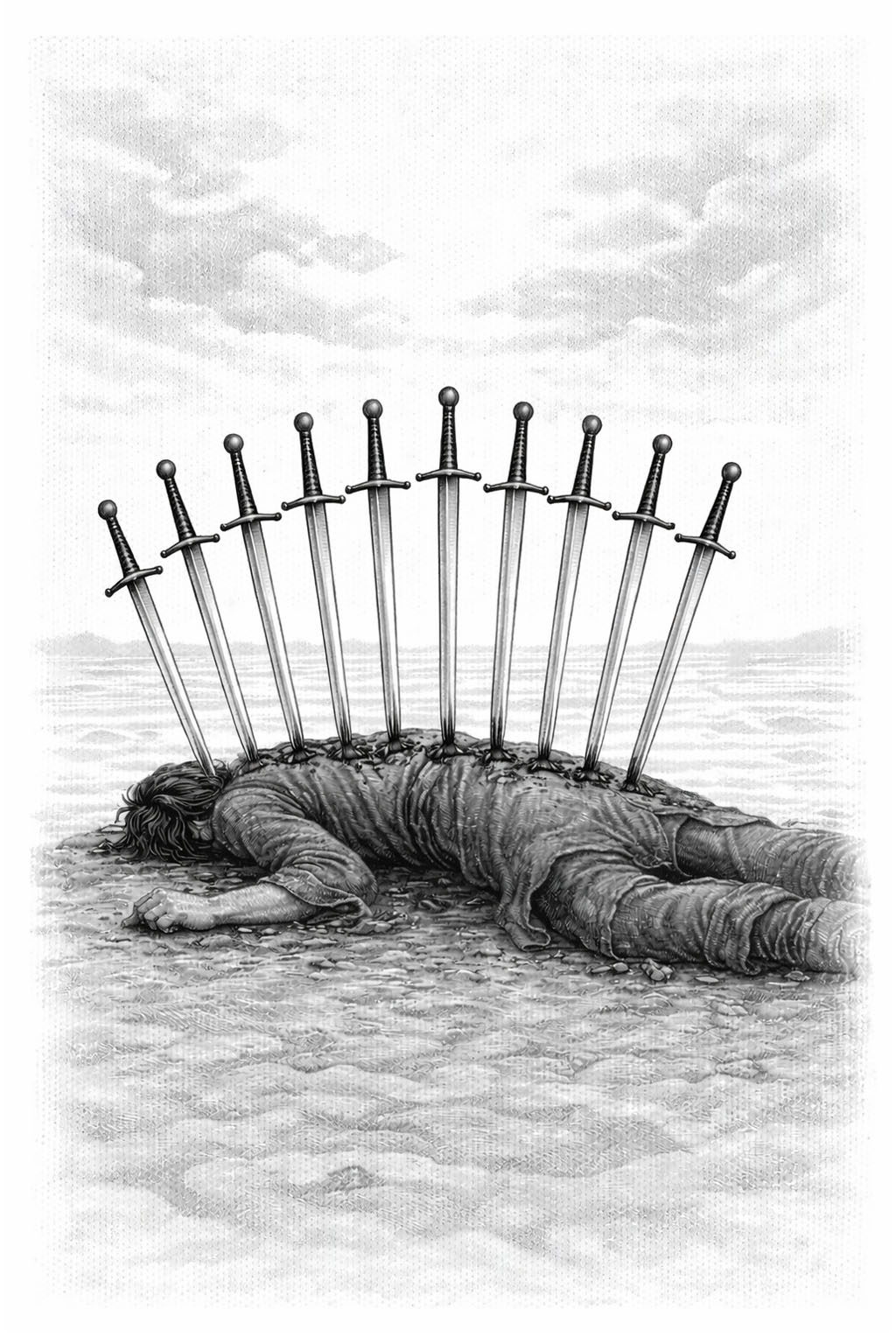
In the context of love, the Ten of Swords typically points to the culmination of a painful cycle rather than a gentle transition. This card is associated with a sense of finality: betrayal, harsh revelations, or an abrupt ending that brings emotional exhaustion. It highlights moments when hope has been depleted and a relationship, or a role within it, has reached an endpoint that is difficult to ignore. The imagery often communicates that circumstances have become untenable and that continuing as before is no longer viable.
Seen analytically, this card invites examination of what led to the breakdown. It can reflect repeated patterns—unresolved conflicts, mismatched expectations, avoidance of difficult conversations, or compromises of personal boundaries—that eventually produce a crisis. It also points to the emotional impact of events: shock, grief, and the need to process loss. The Ten of Swords therefore signals a period in which old structures and narratives about the relationship are being demolished, making space for something different, though not instantly comfortable.
For someone studying relationship dynamics, the card serves as a prompt to consider practical steps toward recovery and clarity. This includes acknowledging the facts without minimizing harm, differentiating between necessary endings and premature exits driven by fear, and identifying personal agency in next steps rather than resigning to victimhood. It can also underscore the importance of external support—friends, professionals, or trusted confidants—when navigating intense emotional upheaval.
Educationally, the Ten of Swords is less about dramatic prophecy and more about the function of endings within emotional life. Endings can be corrosive if avoided, but they can also be clearing: once a limiting or damaging situation is faced and closed, a period of healing and rebuilding becomes possible. Interpreting this card in a love reading benefits from attention to context—other cards in the spread, timing, and the querent’s resources—and
meaning.job
The Ten of Swords in a career context describes a situation of extreme strain, finality, or collapse in a professional area. It points to a point where a project, role, or working pattern has reached its limits: responsibilities may have become unsustainable, a position may have been terminated, or accumulated mistakes and miscommunications have led to a hard break. The image conveys completion through painful means rather than gradual transition, emphasizing the need to acknowledge reality rather than minimize harm.
As an analytical prompt, this card encourages examination of the factors that produced the breakdown: workload distribution, unclear expectations, boundary erosion, ineffective communication, or systemic issues in the workplace. It highlights the importance of documenting what happened, understanding contractual or legal implications, and prioritizing mental and physical recovery. It also points to opportunities for learning—identifying recurrent patterns, updating skills, and creating safeguards to prevent recurrence. Practically, this can translate into assessing finances, engaging HR or legal advice if necessary, communicating professionally about transitions, and planning a deliberate, sustainable next step rather than rushing into another high-risk situation. The emphasis is on closure, clarity, and rebuilding with greater awareness.
meaning.finance
The Ten of Swords, when read in a financial context, signals that a financial situation has reached a decisive and painful endpoint. Symbolically it represents culmination rather than gradual decline: obligations, investments or income streams that have been stressed for some time can fail suddenly or be irrevocably terminated. This card tends to point to scenarios such as a major loss, write‑off, contract cancellation, insolvency, or the forced closing of a venture, and it highlights the objective need to confront the facts rather than to preserve an untenable position.
Interpretively, the card is less about predicting calamity and more about clarifying where systems have broken down and which structures are no longer viable. It emphasizes overextension, poor timing, or unresolved risks that have now produced visible consequences. As an analytical prompt, it highlights the importance of thorough documentation of liabilities and losses, an honest assessment of remaining assets, and consideration of legal and administrative steps required to close or restructure accounts. It also draws attention to how past decisions and risk management practices led to the outcome, making it a useful focus for lessons and procedural changes.
From a planning perspective, the Ten of Swords suggests prioritizing stabilization and containment over elaborate recovery narratives: the immediate objective in such readings is establishing clarity about obligations and exposures so that realistic options can be evaluated. Longer term, the card can mark the clearing away of an unsustainable situation, which creates the factual basis for deliberate rebuilding when conditions allow. In study or advisory settings, it encourages tracing root causes, refining controls, and strengthening contingency planning to reduce the likelihood of similar endings in the future.
meaning.family
The Ten of Swords in a family context points to a situation that feels like an ending, collapse, or profound exhaustion within family dynamics. Symbolically it often marks a point where accumulated stress, unresolved conflicts, or betrayals reach a clear and painful conclusion. That conclusion might be abrupt or it may follow a long period of strain; either way the card highlights a nadir rather than the start of recovery.
Interpretations focus on the emotional and structural fallout: relationships that have been sustained by avoidance or imbalance may come apart, roles and expectations can be destabilized, and individuals may experience strong feelings of hurt, humiliation, or defeat. Communication breakdowns, long-standing resentments, or a sense that efforts to repair have been exhausted are common themes. In some families this card appears around separations, estrangements, difficult conversations, or the recognition that a particular pattern is no longer viable.
From an analytical, constructive perspective the Ten of Swords points attention toward practical stabilization and grief processing. Recognizing that a phase is over allows for clearer assessment of what remains and what needs immediate care—emotional support, boundaries, contingency planning, or outside assistance such as mediation or counseling. It also invites reflection on how previous dynamics contributed to the outcome so that future patterns can be adjusted rather than repeated.
The card does not prescribe a single action but emphasizes the value of honest appraisal and measured responses during a raw period. Prioritizing safety and basic needs, seeking impartial perspectives, and allowing time to process loss or betrayal can create the conditions for eventual rebuilding. Over time the awareness that accompanies this ending can serve as the basis for healthier family structures and more realistic expectations.
meaning.mind
As a psychological snapshot, the Ten of Swords points to a state of acute mental exhaustion and a sense of finality in thought patterns. It often reflects experiences of humiliation, betrayal, or overwhelm that leave cognition feeling fractured: intrusive negative thoughts, a collapsing narrative about the self, and difficulty imagining alternatives. Emotionally there can be numbness, shame, despair, or a sense that one’s options have been exhausted, and these feelings can amplify physical symptoms such as insomnia, fatigue, or tension.
Psychologically, this card is less about dramatic catastrophe and more about the endpoint of prolonged stress or maladaptive thinking. It can mark the moment when coping strategies have been worn thin and previously tolerated contradictions or harmful dynamics can no longer be held together. That exposure can be painful but clarifying: patterns that appeared stable may be revealed as unsustainable.
From an educational perspective, this state invites a focus on containment, grief work, and the slow reconstruction of thought. Interventions that target cognitive rigidity—such as examining core beliefs, reducing catastrophizing, and restoring sleep and self-care—are relevant. It also points to the usefulness of external supports: therapeutic conversations, practical boundaries, and time for processing. The Ten of Swords highlights that reaching a low point can provide information about what needs to be dismantled and reconfigured, offering a starting place for rebuilding more realistic, compassionate internal narratives.
meaning.soul
The Ten of Swords, in the context of a soul or mental-emotional state, describes a condition of acute overwhelm, perceived collapse, or the sense of having reached a painful limit. As an archetypal image it often represents the end of a cognitive pattern—rumination, a self-critical narrative, or an interpersonal storyline—that has become unsustainable. The card names both the severity of distress and the clarity that arrives when something essential is seen as finished: thoughts and beliefs that once guided action are now recognized as harmful, exhausted, or no longer true.
Psychologically, this state can present as mental exhaustion, persistent negative self-talk, feelings of betrayal or defeat, and an inability to see a viable way forward within the existing framework. It can also accompany grief over loss, a collapse of trust, or the experience of hitting a limit after prolonged stress. Important here is the distinction between crisis and irreversibility: the Ten of Swords signals finality in a particular pattern, not necessarily in life itself. It highlights the point at which the mind must let go of a worn-out story in order to reorganize.
From an educational perspective, the card invites analysis of what cognitive, emotional, and relational structures led to the breakdown. It encourages recognition of exhaustion without romanticizing suffering, and it suggests that processing—through rest, boundary-setting, expressing grief, and seeking support—can create the conditions for gradual integration. The emphasis is on acknowledging the end of a pattern, learning from what collapsed, and attending to recovery rather than denying the pain. In readings this card functions as a clear marker of cessation and an opportunity to examine how to rebuild thought patterns and self-care practices in healthier, more sustainable ways.