Context
meaning.love
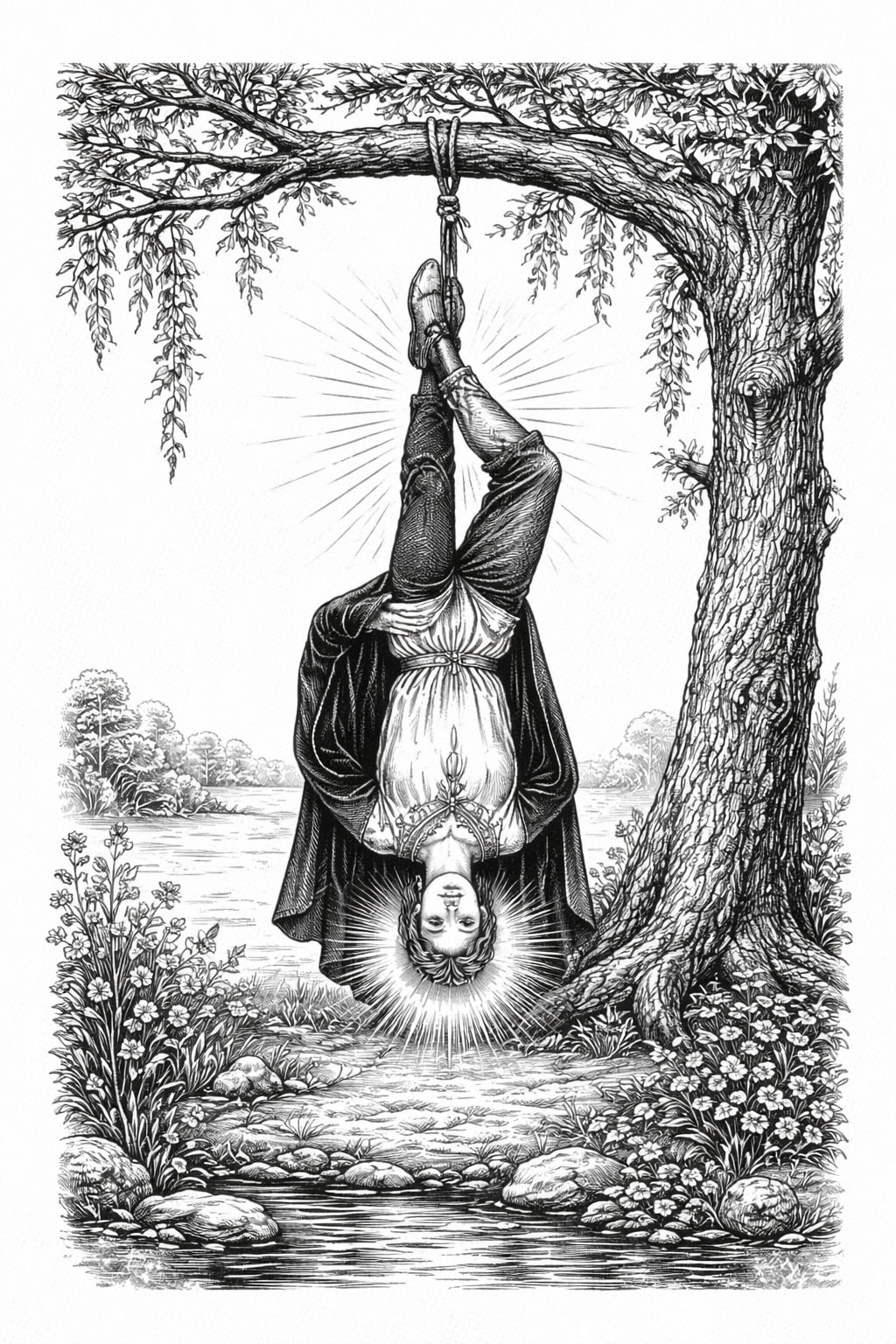
In the context of love, The Hanged Man represents a state of suspension and reorientation rather than movement toward a clear outcome. It indicates a pause in usual dynamics that opens space for re-evaluation: commitments, roles, expectations and patterns that have been operating on autopilot. The image of being suspended upside down emphasizes the value of a changed viewpoint; understanding a partner or the relationship differently often requires stepping outside habitual responses and tolerating uncertainty for a while.
This card highlights themes of voluntary or necessary surrender. That can mean choosing to stop pushing for immediate answers, allowing feelings to settle, or deliberately relinquishing a need for control to see what emerges. The distinction between healthy surrender and self-erasure is important: The Hanged Man's sacrifice is intended to create insight and transformation, not to perpetuate one-sided martyrdom. In practice this may look like setting an intentional pause to reflect, accepting that progress takes longer than hoped, or relinquishing a reactive stance so you can listen and observe more clearly.
Interpretations for people in relationships and those who are single converge around the idea of perspective and patience. For couples, the card often suggests a period in which renegotiation, empathy and reframing are more productive than decisive action; working to understand underlying needs and assumptions can change how both partners move forward. For those who are single, it can point to the usefulness of rethinking dating patterns, pausing to focus on inner readiness, or reframing what you seek rather than continuing the same approach. In either case, the card underscores inner work—reflection, self-awareness and sometimes short-term restraint—as prerequisites for more informed choices.
When using this card as a tool for insight, consider where the relationship might benefit from a different perspective, whether any sacrifices being made are reciprocal and healthy, and how much pati
meaning.job
The Hanged Man in a career context points to a period of suspension or slowed forward movement in professional life, where the immediate emphasis shifts from action to perception. Rather than signaling merely a setback, this card highlights the value of stepping back, reassessing priorities, and deliberately reframing problems. It often indicates that insight and clarity are more likely to come from a change in viewpoint, patience, or a temporary withdrawal from routine activity—for example, time spent learning, reflecting, or reconsidering strategy rather than pushing harder in the same direction.
Analytically, the card draws attention to trade-offs: what is being given up is not always loss but sometimes a conscious sacrifice intended to reveal longer-term advantage or deeper alignment with personal values. It can describe situations where delays are imposed by external circumstances—organizational restructuring, stalled approvals, or market constraints—or where a professional chooses a slower path to gain perspective. The Hanged Man also carries a caution against passive stagnation or self-sacrifice that serves others at the expense of one’s own goals; distinguishing voluntary suspension from enforced entrapment is important.
When interpreting this card for practical decision-making, focus on how the pause can be used productively: reassessing objectives, updating skills, seeking alternative viewpoints, and clarifying what one is willing to exchange for future gains. Equally, evaluate whether inaction has become avoidance and whether some deliberate steps are required to resume progress. The Hanged Man emphasizes methodical reflection and perspective change as tools for making more informed, aligned career choices rather than promising a specific outcome.
meaning.finance
In a financial context, The Hanged Man commonly denotes a state of suspension, reassessment, or voluntary sacrifice rather than active change. It highlights situations where cash flow, investments, negotiations or plans are on hold, where progress is stalled or deliberately slowed to allow for a different perspective. The card emphasizes shifting one’s viewpoint—examining assumptions about value, trade-offs and priorities—so that apparent loss or delay can be reframed as an opportunity to realign resources with longer‑term aims. Emotionally and psychologically, it points to detachment from immediate outcomes and a willingness to accept temporary constraints in order to gain clarity. Practically, this can show up as deferred decisions, paused projects, constrained liquidity, or choosing smaller short‑term returns for greater strategic benefit later. The Hanged Man does not predict an outcome; rather it signals that a period of suspension offers analytical space to re-evaluate options, uncover hidden costs or benefits, and consider whether sacrifice or a new vantage point will better serve financial goals.
meaning.family
In a family context, The Hanged Man represents a period of suspension, reevaluation and altered perspective rather than forward momentum. The image suggests that someone within the household is pausing or being asked to pause: responsibilities may be redistributed, routines interrupted, or decisions postponed so that the situation can be seen from a different angle. This card highlights the value of stepping back and adopting an outsider’s or another family member’s point of view to understand underlying needs and patterns.
Psychologically, The Hanged Man can point to voluntary or imposed sacrifice, role reversal, or caretaking dynamics that change how members relate to one another. It calls attention to what is being held in place by habit, duty or expectation and whether that suspension serves growth or fosters resentment. As a neutral lens, it invites examination of boundaries and fairness: who gains from the pause, who carries the burden, and whether the current arrangement is sustainable.
Practically, the card recommends using the pause as an opportunity for reflection, reframing conflicts, and clarifying intentions rather than rushing to resolve tensions. It also warns against prolonged martyrdom or stagnation—productive insight requires movement once a clearer perspective has been achieved. In family work, this card can indicate that understanding, empathy and deliberate reassessment of roles will be more useful than immediate action.
meaning.mind
The Hanged Man, as a description of a psychological state, denotes a condition of intentional or imposed suspension in which normal forward action is paused and attention shifts toward internal observation and reorientation. It emphasizes a reappraisal of assumptions, priorities and habitual responses by deliberately changing one’s point of view. Cognitively, this state favors perspective-taking, introspection and the testing of alternative narratives; emotionally, it can bring quiet acceptance, resignation, or a paradoxical mixture of clarity and agitation as familiar patterns lose their immediate utility.
This state can be voluntary—an adaptive pause chosen to gain information and reduce impulsive behavior—or it can feel imposed, producing frustration, helplessness or martyr-like resentment if the sense of agency is absent. Psychologically useful aspects include increased capacity for tolerance of ambiguity, deeper empathy from seeing situations differently, and the space to integrate insights before committing to new actions. Risks include prolonged avoidance, rumination without movement toward integration, or conflating sacrifice with self-neglect.
From a therapeutic standpoint, the Hanged Man-type state is best understood as a transformational liminality: a time to attend to internal shifts, examine assumptions, and cultivate conscious reframing. The distinction between constructive suspension and passive stagnation depends on whether the pause is used to develop clearer understanding and intentional choices, or whether it merely perpetuates avoidance under the guise of reflection.
meaning.soul
As a description of an inner state, The Hanged Man represents a period of suspension and inward turning rather than outward activity. Emotionally, it is characterized by a sense of pause, detachment, and deliberate withholding—either chosen or imposed—where urgency gives way to observation and reconsideration. The image of inversion captures the core experience: familiar feelings and assumptions are seen from an unfamiliar angle, producing clarity, re-evaluation, or a temporary numbness as priorities are reassessed.
This state can carry constructive qualities: increased capacity for perspective-taking, reflective patience, and the readiness to let go of habitual responses in order to understand motives or values more clearly. It can also have shadow aspects such as passivity, stagnation, martyrdom, or avoidance masquerading as wisdom. Distinguishing voluntary suspension for insight from stagnation without purpose is a central psychological task associated with this card.
Viewed as an educational prompt rather than a prescription, the card highlights practices that support conscious reflection—structured reflection, boundary-setting around the pause, and small intentional acts that test new viewpoints—while warning against indefinite inertia. The Hanged Man describes an inner laboratory where assumptions are suspended for scrutiny; the outcome depends on whether the pause becomes an opening for thoughtful reorientation or a retreat into resigned helplessness.