Context
meaning.love
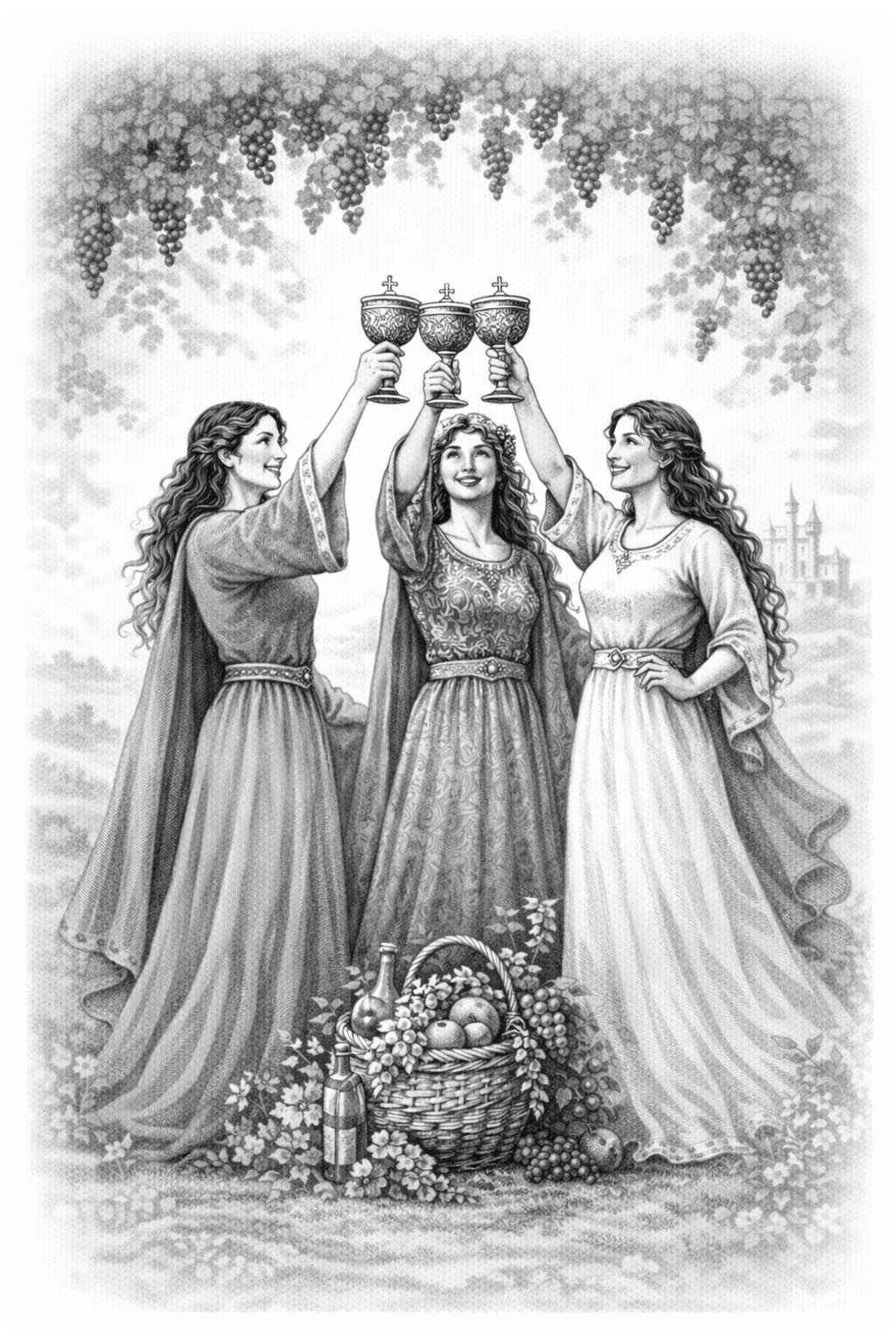
Cup Three belongs to the suit of Cups, which deals with feelings and relationships, and the number three brings a theme of expansion through collaboration. In a love reading this card commonly signals the emotional energy of community: shared joy, celebrations, friendship-based bonds, and the ways a romantic connection is woven into a wider social network. It highlights moments when affection is expressed publicly or reinforced by rituals and gatherings rather than being confined to private exchange.
Interpreting Cup Three in love is less about predicting an event and more about noticing relational dynamics. It can point to a relationship nourished by mutual friends and family, to milestones that are acknowledged collectively, or to a phase when social support bolsters the partnership. It also often indicates that pleasure, creativity and emotional generosity are circulating between people, making it easier to express appreciation and to mark progress together.
At the same time, the card invites attention to balance. The celebratory, group-oriented energy can obscure one-to-one intimacy, create pressures to perform happiness, or foster dependence on external validation. It may also illuminate the presence of a third party in the social circle or tensions that arise from differing expectations about public versus private commitment. Reading this card well involves asking whose needs are being met by the group, what rituals or traditions are shaping the relationship, and whether there is room for private, honest exchange alongside social life.
Use Cup Three as a prompt to examine how community, celebration, and emotional reciprocity function in a love situation. Note the quality of support available, the clarity of boundaries, and whether shared occasions reinforce meaningful connection or divert attention from unresolved issues.
meaning.job
In a career context, the Three of Cups emphasizes collective effort, social networks, and the qualitative aspects of professional life that arise from collaboration. It points to situations where achievements are shared, where people come together to complete a project, solve a problem, or mark a milestone. The card highlights the productive interplay of diverse skills and the morale boost that comes from mutual recognition and supportive peer relationships. It also draws attention to the informal structures—peer groups, mentorship circles, alumni networks, professional associations—that can accelerate opportunities and create a sense of belonging at work.
Analyzed functionally, this card signals environments in which coordination, communication, and emotional intelligence matter as much as technical competence. Successes in such settings depend on clear roles, equitable distribution of credit, and the capacity to translate celebratory or social energy into sustained collaboration. The Three of Cups can also illuminate the importance of cultivating goodwill: small acts of acknowledgement, reciprocal help, and constructive feedback reinforce trust and long-term cooperation.
Viewed more critically, the card can indicate potential pitfalls around group dynamics. Cohesion can edge into cliquishness, gossip, or the masking of unresolved conflicts by surface-level harmony. Overreliance on social capital can obscure individual contribution or lead to complacency if critical evaluation is sidelined in favor of maintaining group cohesion. In practical terms, this suggests attention to boundaries, transparency in decision-making, and mechanisms for fair recognition and accountability.
For professional development, the Three of Cups advises a balance: leverage networks and celebrate collective wins while maintaining clarity about responsibilities and outcomes. Investing in relationships—through mentoring, team rituals, or cross-functional collaboration—can yield tangible career returns, provided those connections are man
meaning.finance
In a financial context, the Three of Cups emphasizes collective effort, pooled resources and the role of social networks in creating economic opportunities. It highlights situations where money is raised, managed or spent as a group—crowdfunding, joint ventures, partnerships, cooperative enterprises, shared household budgets or celebrations that generate or distribute funds. The card points to advantages of collaboration: complementary skills, risk-sharing, access to wider contacts and the possibility of achieving goals faster through coordinated action.
At the same time, the Three of Cups flags practical considerations rather than guarantees. Shared finances require clear agreements about contributions, decision‑making, profit and loss allocation, and exit terms. Without written arrangements and transparent accounting, uneven contributions or assumptions about roles can cause friction. There is also a tendency toward social pressures or celebratory spending that can undermine longer‑term plans.
A measured approach is advised: treat group arrangements as financial partnerships with documented expectations, maintain separate contingency plans, and assess how communal commitments fit with individual risk tolerance and goals. Use the collaborative energy to build structures—budgets, contracts, reporting—that sustain joint success rather than relying solely on goodwill or informal understandings.
meaning.family
In a family context, the Three of Cups (Cup Three) points to the dynamics of communal emotional life: shared joy, mutual support, collective rituals, and the ways relatives come together to mark transitions. Symbolically it emphasizes connection through celebration and collaboration—births, reunions, successful teamwork around practical matters, or simply the emotional sustenance that comes from being part of a close-knit group. The card highlights the interpersonal skills that keep a family network resilient: generosity, reciprocity, and the capacity to mourn and rejoice together.
Analytically, the card draws attention to patterns of group cohesion and the roles people play within that cohesion. It can indicate effective social scaffolding in which members contribute to each other’s wellbeing, coordinate care, and maintain traditions that reinforce identity and belonging. It also serves as a marker for the quality of communal rituals and communication: when these are functioning well, they support emotional regulation and collective problem-solving; when they are weak, opportunities for shared meaning and mutual support may be missed.
The Three of Cups also has a shadow side that is useful to consider. Close social bonds can drift into exclusionary cliques, enable avoidance of difficult individual issues, or foster overindulgence as a substitute for deeper emotional work. In the family setting this can look like habitual minimization of a member’s needs in favor of group harmony, or reliance on celebratory gatherings to paper over unresolved conflicts. Practically, engaging constructively with the card’s energy involves attending to both communal strengths and individual boundaries: nurturing rituals and mutual support while ensuring that quieter concerns are heard and addressed.
meaning.mind
When the Three of Cups appears in the context of psychological state, it points to an emotional atmosphere characterized by social connection, shared joy, and mutual support. It describes a mind that is buoyed by belonging: feelings of acceptance, gratitude, and a sense that one’s emotions are acknowledged within a network of friends, family, or collaborators. Creativity and expressive warmth are likely heightened, and mood tends toward celebration, relief, or lightness after stress or isolation.
Analytically, this card signals that interpersonal bonds are central to emotional regulation at the moment. Emotional needs are often met through communal rituals, group activities, or cooperative projects rather than solitary introspection. Increased empathy, generosity, and reciprocal emotional exchange are evident, which can facilitate healing and bolster self-esteem.
At the same time, the psychological picture can include subtler cautions: an overreliance on external validation, avoidance of deeper individual work in favor of convivial distraction, or a tendency toward group consensus that suppresses personal complexity. For balanced wellbeing, the strengths of connectedness and celebration are most useful when paired with attention to personal boundaries and honest self-reflection, so that group warmth supports rather than substitutes for inner processing.
meaning.soul
As an indicator of an inner state, the Three of Cups describes a mood oriented toward connection, shared joy and emotional abundance. Emotions are lifted by companionship: there is a sense of belonging, communal support and relief that difficult tensions have eased. The picture is one of warmth, gratitude and buoyancy rather than solitary introspection, often accompanied by a readiness to express appreciation, celebrate small victories and participate in collaborative or creative activities.
This card also points to increased sociability and openness. Feelings are accessible and easily communicated; laughter, mutual encouragement and a sense that others understand or accept one’s feelings are prominent. It can signal the restoration of trust after isolation, the comfort of a supportive circle and the energizing effect of communal rituals or shared experiences.
On the subtler side, the Three of Cups can mark an emotional orientation that favors external validation or temporary euphoria. The focus on group harmony may smooth over unresolved personal issues, encourage avoidance of deeper vulnerability, or lead to overindulgence in pleasure as a way to cope. Group consensus can feel reassuring but might limit individual honesty if personal needs are suppressed.
To work with this state, it helps to appreciate and cultivate the nourishing social bonds while also checking for authenticity and personal boundaries. Using the uplift of communal energy for creative projects, mutual healing or practical support tends to extend its benefits beyond the moment. At the same time, maintaining awareness of one’s deeper feelings ensures that celebration and camaraderie complement, rather than replace, sustained emotional work.